Municipal Affairs

Quality policy

In relation to the Ministry of Municipalities Affairs and Agriculture that aim to provide the requirements of sustainable urban development and food security and providing high-quality services for all Bahrain residents in cooperation with governmental entities, municipal councils, and the private sector.

The ministry aims to make use all of its efforts to satisfy the needs & expectations of internal and external interested parties and maintain continuous improvements through:

The ministry will share the contents and goals of this policy with all employees to ensure the implementation of the policy in an efficient & effective manner. Therefore, the ministry is committed to continuously improving and developing the works to reach customer expectations and satisfaction.


  • Implementing quality management system in accordance with ISO 9001:2015

  • Providing the services through qualified employees.

  • Utilizing creative solutions for sustainable urban development & efficient involvement in the living environment.

  • Provide attractive investment environment and carry out a supportive role in the economic growth and urban development.

  • Building solid partnerships with legislation, civil bodies, and municipal councils.

  • Emphasizing leadership strategic planning improvement, and ensuring customers satisfaction.

  • Developing our services in accordance following governmental strategies, laws, and regulations.

Eng. Wael Bin Nasser Al Mubarak
Minister of Municipalities Affairs and Agriculture 

Vision, Message & Values

From here we start… Our message

The Ministry of Works, Municipality Affairs and Urban Planning message aim towards providing different services to the Bahraini community through providing various services to every home and commercial shop, and the Ministry provides services to citizens, residents and business owners alike.

The ministry provides its services at a high level of proficiency and speed to meet the needs of the beneficiaries, with flexibility in coordination between the authorities concerned to meet the public needs.

The Ministry contributes in the overall development of the Kingdom of Bahrain. With the preparation of the 2030 vision of the Kingdom of Bahrain and the initiatives of the Economic Development Board and its efforts to create a governmental environment in economic and social development, the ministry has become a key partner in the development plans.

The Ministry provided community services that respond to local needs, thereby enhancing the confidence of citizens and residents in the Government.

The Ministry is currently striving to achieve a qualitative leap in performance by investing the resources available to achieve this transformation, especially with the ability of the Kingdom to create jobs and achieve economic growth based on development and competition in the business sector.

The Ministry of Works, Municipality Affairs and Urban Planning undertakes a comprehensive review of its performance to serve the community and contribute to the 2030 Vision Economic achievement. The senior management seeks to identify suitable solutions for the following issues:

  • What role should the Ministry play to support economic and social development in the Kingdom of Bahrain?

  • What functions and activities should the Ministry undertake?

  • What are the appropriate management frameworks to deliver services effectively and at reasonable prices?

The Solutions to these issues require institutional re-engineering Surrounded the development of a strategy to build an effective, flexible, dynamic and responsive government.

Ministry Strategy

Vision

The Ministry of Works, Municipality Affairs and Urban Planning aims to achieve balanced urban development through the establishment of an integrated structure for the implementation of the national strategic planning plan, in addition to meeting the 2030 economic vision of the Kingdom of Bahrain.


The Message

The mission of the Ministry of Works, Municipal Affairs and Urban Planning is to contribute in the enhancement of Bahrain's status as an economy and economic center by preparing effective policies and regulations for the urban planning, municipal and agricultural sectors to respond to the needs of Bahraini society.
We strive to provide the requirements of sustainable urban development by providing high quality planning, municipal and agricultural services, in coordination with the legislative councils, the municipal councils and, government agencies.
The Ministry of Works, Municipality Affairs and Urban Planning is committed to the national values set out in 2030 Vision.
These values are based on fairness, competitiveness and sustainability in providing high quality services in terms of community and environmental responsibility.


Values

  • Strengthening the spirit of institutional affiliation to achieve the objectives of the ministry and to give it the priority to any other goals.

  • Maintain Proficiency and professionalism to accomplish services and tasks according to the highest standards.

  • Achieve outstanding results through teamwork.

  • Enhancing principles of learning and developing through benefiting from the experience of others in providing efficient services.

  • Working in ways that achieve transparency and professionalism responsibility at work.


Important issues and development initiatives

The objectives of these initiatives are:

  • Redirecting the ministry towards the management policies, planning, programming, monitoring, evaluation and project management, while assigning the implementation and delivery of services to the private sector and the municipalities themselves. This allows the ministry to focus on its development role in urban areas, support the growth of the economy and raise the professional level of engineering offices, contractors and small and medium enterprises. Job opportunities for Bahraini citizens to accommodate young talent and university graduates.

  • Improving regulatory frameworks and developing legislation aimed at raising the efficiency and quality of services and projects. To achieve this, we must update and develop standards and specifications, and modernize and develop the methods of rehabilitation of suppliers and contractors.

  • Responding to the development of the role of the government and the development role of the Economic Development Board, which provides the strategic framework for government and private action, while unifying the efforts of government agencies towards a unified vision, as well as the role of the e-government Authority in preparing technical, administrative and executive frameworks to develop government services and develop necessary partnerships.

  • Develop policies on fee systems, retrieval methods, and user fees for utilities.

  • Revealing the feasibility of changing the structure of the provision of some services carried out by the ministry and transfer them to independent bodies or the private sector, as happened in the contracts of cleaning and collection of solid waste, and is subject to this structure to the standards of efficiency and effectiveness, in line with the ministry's orientation to become more focused and highly efficient.

  • Outsourcing services and projects, as well as strengthening the internal capacity of the Ministry to manage the services provided by third parties (cleaning services, waste collection and recycling, maintenance services, guarding).

  • Raising public awareness of the services provided by the ministry while improving the good and safe use of utilities and public services, in addition to raising awareness about the appropriate living behaviors with the green cities.

  • Support IT management and transform it into a department that supports the ministry's strategy in management information systems and decision support, while engaging in e-government applications.

  • Enhancing the concept of performance management in order to develop the culture of the ministry, which stems from the challenges and the role played by the ministry and its impact on the national level in Bahrain. The ministry's leadership seeks to build this culture based on the values it adopts in building effective work teams, good communication, Mastery, learning and continuous development

  • The focus is on the human resources, which requires re-engineering the concept of human resources management. This is based on the fact that the ministry deals with a large number of service projects, which affects the daily lives of citizens.

  • Integrating the administrative infrastructure of the ministry and strengthening the supporting administrative functions such as coordination, follow-up and archiving, procurement and tenders, public relations and communication.

  • Integrating administrative information systems, developing the ministry's operations towards e-government, improving customer service systems and providing information.

  • These improvements and proposals from the Government of Bahrain require the building of advanced policy management capacities capable of evaluating strategies and plans that enable different sectors to grow in harmony and sustainably.


Strategic objectives and sub-targets

Strategic development objectives have been formulated based on strategic directions, an assessment of opportunities and modernization in 2014, issues related to economic development and 2030 National Vision, and a draft strategy for the Ministry.

These objectives include management processes that serve the Ministry's sectors and the objectives of these sectors.
The processes and instruments covered by the strategic and sub-objectives include the following:

  • General Management

  • Human Resource Management

  • Financial Management / Accounting

  • Information Technology

  • Urban Planning Sector

  • Municipalities sector

  • Agriculture sector


Test
News
Riffa - Southern Region Municipality The Municipality of the Southern Region, represented by the License...

The History of Municipality

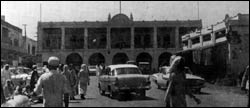
Before the inception of the municipality in 1919 there was nothing in Bahrain called municipality or anything of that kind. Bahrain set up the municipality to help and serve the citizen and to organize their daily life, In the month of Do-Aloqdah in the year 1337 Hijri corresponding to July 1919, the government of Bahrain set up the municipality of Bahrain which is located in Manama to be the first in the Arabian world.

The municipality is the first official department in Bahrain it was establishment accordance to the law issued in 20 January 1920 to set up a municipality in Manama which was and still in the capital of Bahrain. Eight members of the municipal administration, which were designed to assist Bahraini citizens, were appointed after being appointed by the government.
His1

Since the establishment of the municipality, the latter has begun to provide services to houses and commercial stores, and has begun to remove the piles of garbage accumulated in Manama, which was called "Samada".
In the beginning, the municipality's work was limited to synagogues and garbage collection. Over time, the municipality endeavored to carry out other tasks such as widening the roads in 1929. It also began to open new markets, monitor the massacres, standardize weights and standards, Over time, the municipality became responsible for everything, and was commissioned to manage the water liquefaction project at the beginning of 1958.
The first budget was set for the municipality when it was established in 1920 (604) dinars for revenue, while the expenditure was estimated at 604 dinars, as the amount of revenue was going to expenses to the modest budget at that time.
The municipality council was setup in 1339 Hijri corresponding to 1920 as the first administrative body for the municipality. The budget then was modest.
The municipality council was set up as the first administrative body developed in Bahrain to run the affairs of the country.

The municipality was the first experiment born in the country to keep in pace with the growth and the burgeoning growth of economy, social and education and the municipality body members lived up to that responsibility.
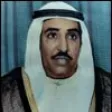
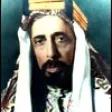
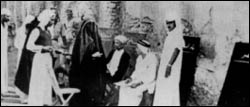
The late Shaikh Abdullah Bin Isa Alkhalifa was the first to preside the council of the municipality and by the end of 1920 the late Shaikh Hamad Bin Isa Alkhalifa presided the municipality’s council and his highness continued to preside the council till 1929 and he was succeeded by the late Shaikh Mohammed Bin Isa Alkhalifa and at that time members of the municipality council were increased from eight to twenty members. The income of the municipality council boosted the economy of the country which urged the government to hold an election for the council half of them elected while the other half appointed by the government, meanwhile the Bahraini women also took part in the election, in the year 1951-1952.
His2


The election was conducted annually with as well the appointment of council members till the numbers jumped to 24 in (1949) half of them elected while the other half appointed by the government.
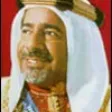
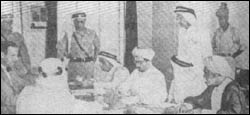
In the beginning of 1938, Sheikh Abdullah bin Isa Al Khalifa, the successor to his brother Sheikh Mohammed, was the second time Sheikh Abdullah bin Isa to head the municipal council after he was head of the education department at that time. Sheikh Abdullah remained president of the municipal council until 1956, where he was appointed to the presidency of the administrative council. He was succeeded by the late Sheikh Issa bin Salman Al Khalifa when he was the heir to His Highness Sheikh Salman Bin Hamad Al Khalifa in late 1961, and His Highness Sheikh Isa bin Salman Al Khalifa took over the throne after being succeeded by the Prince. Shaikh Salman, the late Shaikh Isa bin Salman Al Khalifa, exerted efforts to resolve the situation, economy and build Bahraini citizens. He also focused on the development of Bahrain in all fields and appointed his brother Sheikh Khalifa. Bin Salman Al Khalifa to help him achieve this.
His3

His Excellency Shaikh Khalifa Bin Salman Alkhalifa continued in preside the municipal council till 1967, till the council shifted to administrative body headed by Shaikh Abdullah Bin Khalid Alkhalifa succeeding His Excellency the current prime minister Shaikh Khalifa Bin Salman Alkhalifa, and during his tenure of he municipal council the resolutions and decisions then taken were decisive and fraught with accomplishments. And Shaikh Abdullah added numerous department to the municipal council which pushed ahead the wheels of progress and development.
The councils continued till late 60’s when the nominees obtained a few vote and the municipality then transferred to the government during 1970, independence day, in regard to the first location the municipality was hired in Yousif Bin Ahmad Kanoo building “Altijar Road” the west side of the building Batelco as a temporary location due to the modest financial circumstances.
And the municipality function continued to be numerous fraught with ramified tasks and due to the small building the officials stressed the need to increase administrative growth due to the increasing population, and shifted to another larger building with many offices to cope with the situation.
Then the building was shifted to the late Shaikh Hamad Bin Isa Alkhalifa building opposite “Bab Al Bahrain” following one year of organizing and law legislations.
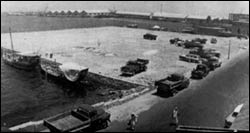
Then the location was shifted near “Souq Alaham” in Manama in 1341 Hijri 1923 Three year since the inception of the municipality and the building was demolished replaced now by (municipality’s arena) interaction of Shaikh Abdullah and the municipality roads in Manama.
His4

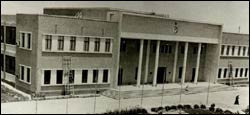
And designed with modern engineering to be more spacious and His Highness the late Shaikh Salman Bin Hamad Alkhalifa the ruler of Bahrain then in 1957 issued and approved an order to own maritime plot of land on government road to build new building for the municipality.
His5

In the year 1959 the land reclamation where the municipality building would be on began which is the current building for municipality affairs at the ministry of housing.
His6

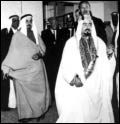
His Highness the Amir of Bahrain the late Shaikh Isa Bin Salman Alkhalifa opened municipality building on the first anniversary of the national day celebration on 16th December 1962.
The ministry of agriculture and municipalities continued to perform its duties and tasks till the first decree on 19th January 1970 from London allowing His Highness the late Shaikh Isa bin Salman Alkhalifa to set up a council for the state wrapped up by executive authority decree no. 2 1970 later on state ministries among them agriculture and municipality directorates consisting of the following:

1- Municipality Directorate
2- Agriculture Directorate
3- Villages affairs Directorate

On the outset of Bahrain independence on the 14th of August 1971 His Highness the late Amir of Bahrain Shaikh Isa Bin Salman Alkhalifa issued a Decree to name the State council as the council of ministers and directorates at the ministries and became the directorate of municipality and agriculture ( The Ministry of Municipality and Agriculture) the Decree no. 16 was issued in the year 1973 on 22th August 1973 to set up a central municipality commission to perform all the tasks and services of the disbanded municipality council for a transitional period of two years, the commission and was made of 28 members appointed by an edict by the Prime Minister 14 members of which citizens from municipality and 14 members representing the state ministries in connection with the public services. The minister of municipality and agriculture chaired the central municipal commission.

While Shaikh Abdullah Bin Khalid Alkhalifa was at the helm of the ministry of municipality and agriculture, it performed various services such as public cleaning and hygiene, environment protection, planting tree and palm trees and greenery in road sides and in villages, public gardens, towns and cities planning and at that time the ministry joined the outside world such as the Arab cities organization and in 1970 the municipality hosted the second Arab cities organization conference which adopted many positive resolutions, that benefited the organization members states.

Establishment of the Central Municipal Authority

The late Sheikh Abdullah bin Mohammed bin Ibrahim Al Khalifa was appointed Chairman of the Central Municipal Authority, following the issuance of Amiri Decree No. (19) of 1975, on September1975.

The late Minister exercised his powers stipulated in the Legislative Decree No. (16) of 1973 establishing the Central Municipal Provisional Authority and Decree Law No. (14) of 1975.

On September 12, 1976, Amiri Decree No. (16) of 1976 was issued appointing Sheikh Abdullah Bin Ibrahim Al Khalifa as the Chairman of the Municipal Council with the rank of Minister.

The late Sheikh Abdullah has served as Chairman of the Municipal Authority, demonstrating his ability to manage and provide the requirements of Bahrain society

During his tenure, municipal observers were appointed in various regions, in addition to the opening of more municipalities to cope with the urban development. At the time, the number of municipalities was twelve.

The municipal authority at the time had a significant impact on the establishment of parks and parks in the cities and villages of Bahrain, in addition to landscaping the streets, and taking care of the cleanliness system by providing it with experts and the latest technology in the field of hygiene and environmental protection.